Downsizing in Boise: How to Plan the Home Sale and Move Without Rushing
Planning to downsize in Boise? Learn how to organize belongings, prepare your home, coordinate the sale, and plan your next move without rushing.

Downsizing is rarely just about choosing a smaller house. For many homeowners, it involves several decisions happening at the same time: what to keep, what to sell or donate, whether the current home needs preparation, when to list, whether to sell before buying, what the next home should look like, and how much overlap or flexibility is needed between moves.
Starting early can create more options and reduce pressure. A downsizing move in Boise, Eagle, Meridian, or Star can be smoother when housing decisions, belonging decisions, home preparation, sale timing, and moving logistics are treated as separate but connected steps.
How Do You Start Downsizing Without Feeling Rushed?
Start earlier than you think you need to, and separate the process into smaller decisions. First define what you want from the next home, then begin sorting belongings gradually, evaluate the condition of your current home, and build a realistic selling and moving timeline.
Downsizing is easier when housing decisions, belonging decisions, home preparation, sale timing, and moving logistics are treated as separate but connected steps rather than one overwhelming project.
Start With the Next Chapter, Not the Stuff
Before sorting belongings, it helps to define what the next home needs to accomplish. Ask yourself:
- Do I want less maintenance?
- Do I want fewer stairs?
- Do I want a smaller yard?
- Do I want a lock-and-leave property?
- Do I want to stay near the same part of the Treasure Valley?
- Do I want to move closer to recreation, services, or everyday conveniences?
- Do I want newer construction or an established neighborhood?
- Do I need additional storage or space for guests, hobbies, pets, or a home office?
The answers depend on your priorities. Not every downsizer wants a condo, a townhome, or a one-story home. Some homeowners are looking for a smaller yard, others for less interior space, and others for a property that requires less ongoing upkeep.
How Far in Advance Should You Start Downsizing?
There is no universal timeline, but starting several months before an intended move can create more flexibility when there are many belongings, property-preparation needs, or multiple decisions to coordinate. The more decisions involved, the more useful an early start can be.
A general planning sequence may look like this:
Early Stage
- Define next-home priorities
- Review finances with appropriate professionals
- Begin sorting low-emotion areas
Middle Stage
- Evaluate current-home condition
- Decide preparation strategy
- Research replacement-home options
Later Stage
- Finalize listing timeline
- Arrange moving logistics
- Prepare for closing and transition
How to Sort Through Years of Belongings
Sorting is often the most time-consuming part of a downsizing move. A practical approach is to work gradually, starting with easier spaces before tackling more personal areas.
Consider sorting items into these categories:
- Keep
- Give to family or friends
- Donate
- Sell
- Recycle
- Discard
- Decide later
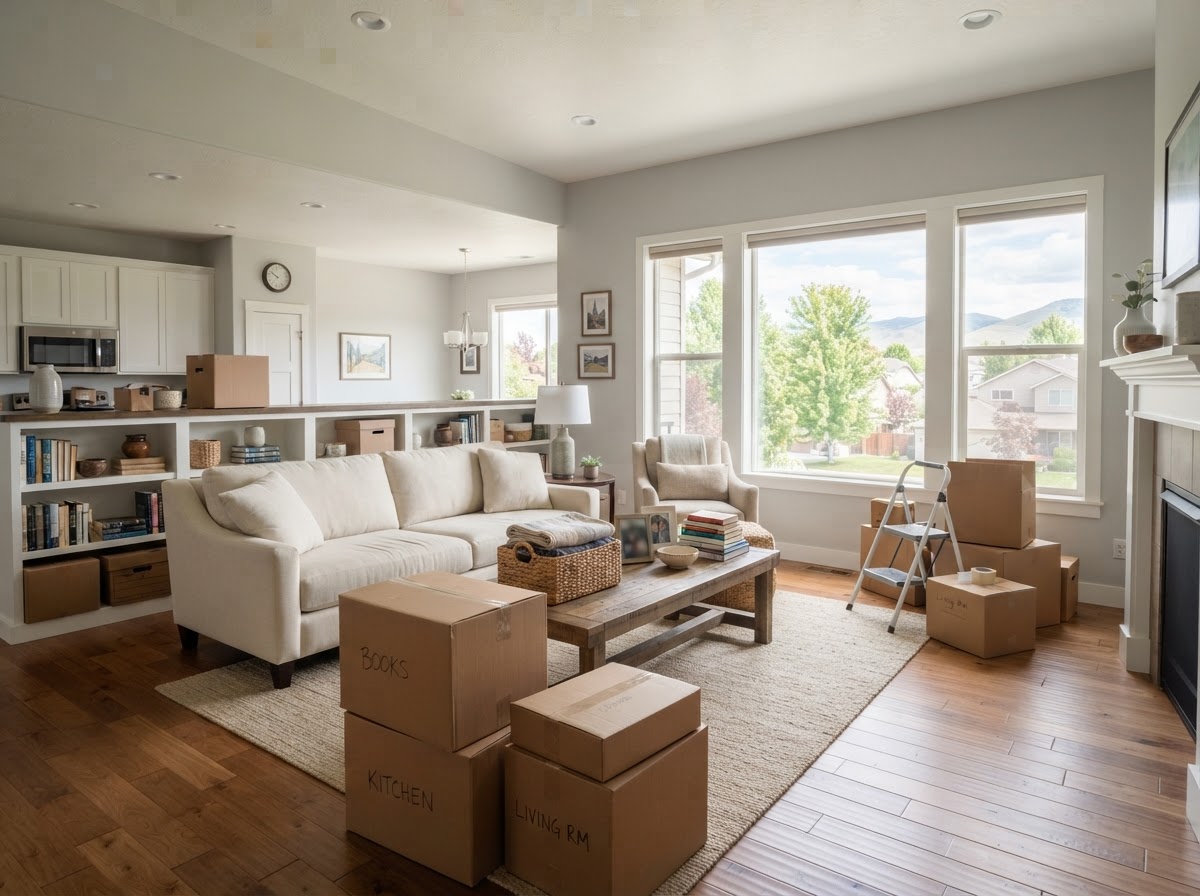
Start with easier spaces such as linen closets, garage storage, duplicate kitchen items, seasonal items, extra furniture, and storage rooms. Gradual sorting over several weeks or months often works better than trying to clear an entire home in one weekend.
What Should You Do With Furniture and Items You No Longer Need?
There are several options for items that will not be making the move:
- Family or friends
- Local donation organizations
- Estate-sale companies
- Consignment
- Online resale
- Junk-removal services
- Professional move managers where appropriate
- Recycling or responsible disposal
The right option depends on the item, its condition, and your timeline. Some homeowners use a combination of these approaches.
Should You Repair or Update the Home Before Selling?
Longtime homes may have deferred maintenance, older finishes, cosmetic wear, or repairs that accumulated over time. Not everything needs to be updated before selling. The goal is not automatically to renovate. It is to determine which issues affect condition, presentation, or market positioning and which may be reasonable to leave for the next owner.
For a detailed breakdown of what may be worth fixing, read Preparing Your Boise Home to Sell in 2026: What to Fix, Update, and Skip and Selling a Home in Boise As-Is vs. Making Repairs: How to Decide.
What If You Do Not Want to Manage Repairs?
Homeowners may have multiple selling paths. Possible options include limited preparation, selling largely as-is, completing selected repairs, exploring a Renovate & Sell option, or comparing other selling options. Availability and terms vary, and not every property qualifies.
Should You Sell First or Buy Your Next Home First?
Downsizers may choose different sequences based on need for current-home equity, availability of the next home, comfort with temporary housing, ability to manage overlap, and desired timeline. For a detailed comparison of these options, read Should You Sell Your Boise Home Before Buying Your Next One? Your Options in 2026.
Some homeowners may also want to explore Buy Before You Sell if appropriate and available. Qualification and program availability vary.
Build Flexibility Into the Move
There are practical ways to reduce time pressure during a downsizing transition:
- Flexible closing dates
- Temporary housing
- Storage
- Moving in stages
- Delayed possession where contractually available and appropriate
- Buying before selling where financially feasible
- Selling first and taking more time to choose the next property
Depending on the transaction, there may be ways to build additional transition time into the plan. Possession arrangements depend on the contract and the parties involved.
What Should You Look For in Your Next Home?
A practical replacement-home checklist may include:
- Number of levels
- Yard size and maintenance requirements
- Storage and garage space
- Guest space or home office
- Outdoor space
- HOA structure where applicable
- Lock-and-leave potential
- New construction vs. resale
- Proximity to everyday services and recreation access
- Travel patterns and long-term usability
These features are not universal preferences. The right home depends on your individual priorities and how you plan to use the space.

Searching for a Smaller or Lower-Maintenance Home
Once you have narrowed the next-home criteria, active property searches should happen through SearchBoiseIdaho.com, Sylvia's dedicated Lofty IDX and home-search website for Boise-area properties. HomeBySylvia.com provides community guidance, buyer education, and consultation options.
When Professional Help Can Make the Process Easier
Some homeowners choose to work with professionals for different parts of the transition. These may include:
- REALTOR®
- Professional organizer
- Estate-sale professional
- Move manager
- Movers
- Contractors and cleaners
- Storage providers
- Financial, legal, or tax professionals where applicable
The right team depends on the complexity of the move. Homeowners should consult appropriate qualified professionals for financial, tax, legal, or lending questions.
A Simple Downsizing Plan
Use these steps to keep the process organized:
- 1Define what you want from the next home.
- 2Decide which belongings will make the move.
- 3Evaluate your current home's condition.
- 4Compare selling and preparation options.
- 5Determine whether to sell first or buy first.
- 6Build enough time into the move for logistics and transition.
- 7Begin the next-home search once your priorities are clear.
Following these steps can help you make a property-specific plan rather than trying to solve everything at once.
Sylvia's Perspective
I think one of the most helpful things a homeowner can do when downsizing is separate the decisions instead of trying to solve everything at once. You do not have to choose the next home, sort every belonging, prepare the current house, and determine the selling timeline in the same week. I prefer to start with what the next move needs to accomplish, then work backward. That makes it easier to identify what needs attention now, what can wait, and which selling options are worth comparing.
Frequently Asked Questions
How far in advance should I start downsizing before a move?
Should I sell my Boise home before buying a smaller one?
Do I need to update my longtime home before selling?
What is the easiest way to start sorting belongings?
What should I look for in a downsized home?
Where can I search for smaller homes in the Boise area?

About Sylvia Dorrance
Sylvia Dorrance is a Boise-area REALTOR® with eXp Realty serving Boise, Eagle, Meridian, Star, the Boise Foothills, and the Treasure Valley. She helps homeowners navigate downsizing, home-sale preparation, relocation, and lifestyle transitions with a practical, thoughtful approach focused on timing, options, and individual priorities.
Thinking About Downsizing but Not Sure Where to Start?
You do not need to make every decision at once. A clear plan can help you separate the home-sale, sorting, timing, and next-home decisions so you can move forward at a pace that fits your priorities.