
 By Sylvia Dorrance, REALTOR®, eXp Realty
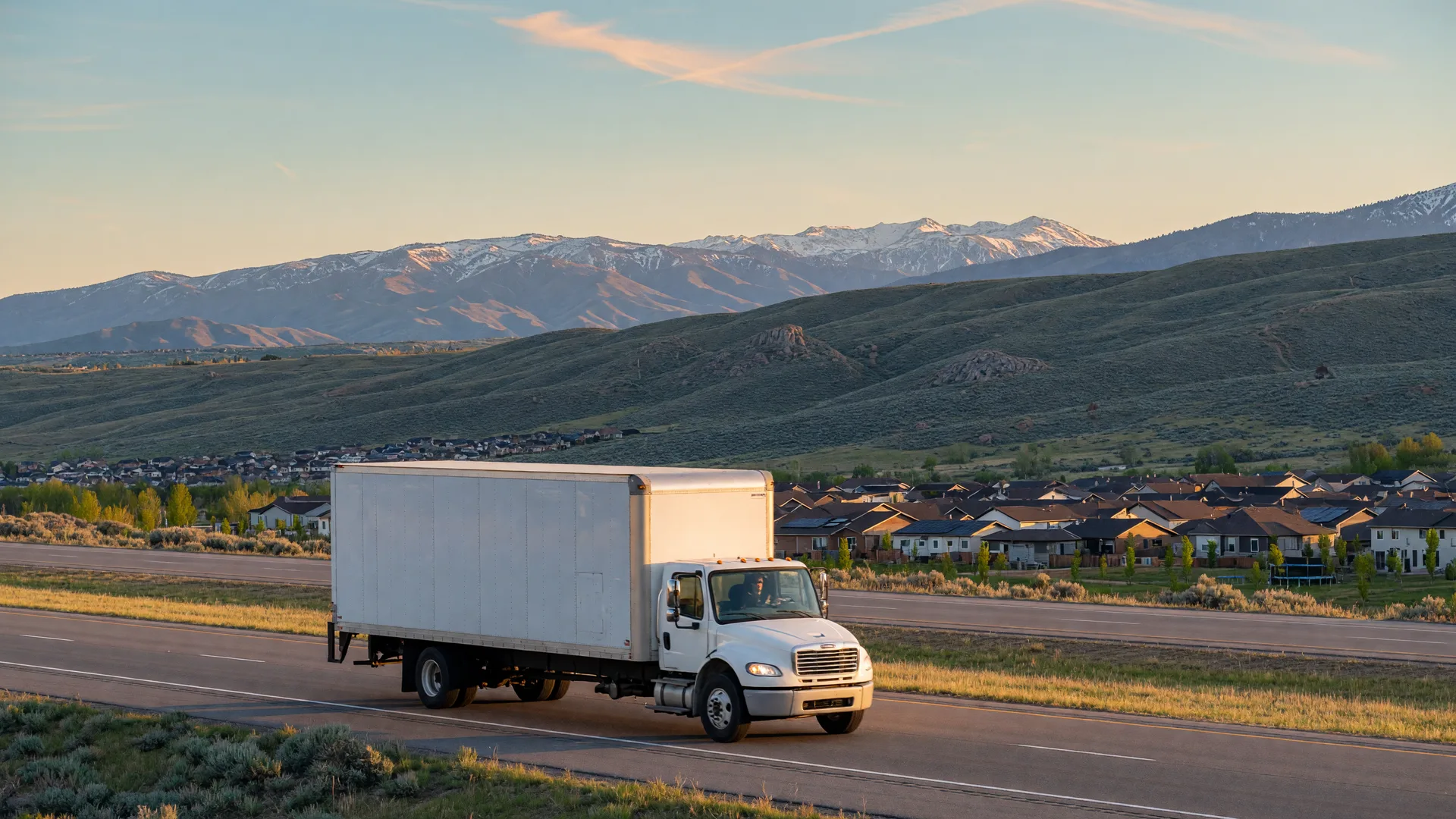
The Boise area is close enough to the Pacific Northwest that the move feels possible, and far enough that daily life genuinely changes. Seattle sits about 500 miles away, a drive of roughly seven and a half hours, and Portland about 430 miles, roughly six and a half hours. That makes weekend visits, moving day, and trips back home manageable, while the winters, the job market, and the housing market become your own once you arrive. Here is what to know before you decide, starting with the distance and the drive.
Getting there: how far, and what the drive is like
Most of the drive from Washington or Oregon to the Boise area is on interstates, which is the good news. From Seattle you take I-90 over Snoqualmie Pass and connect to I-84 at Pendleton, Oregon. From Portland you run I-84 east through the Columbia River Gorge, past Cabbage Hill toward the Idaho border. From Spokane, I-90 angles southeast to meet I-84 near the state line, crossing Fourth of July Pass and Lookout Pass. In fair weather the trips split roughly as follows.
| From | Distance | Nonstop drive time | Winter note |
|---|---|---|---|
| Seattle, WA | About 500 miles | About 7.5 hours | Snoqualmie Pass and the Blue Mountains can add an hour or more |
| Portland, OR | About 430 miles | About 6.5 hours | The Gorge and Cabbage Hill can turn icy |
| Spokane, WA | About 420 miles | About 6.5 hours | Fourth of July Pass and Lookout Pass see snow and chain checks |
Those are nonstop estimates without stops, weather, or construction, so plan for more. In winter, mountain passes on every route can slow the drive and require chains, and Idaho 511 and the Idaho State Police publish current road conditions. The same preparation applies as for any Idaho storm, and the full checklist lives in the winter driving guide.
If the drive is new to you, winter driving in Idaho breaks down tires, chains, fuel, and emergency kits, because the first Idaho winter storm is a different experience from a coastal rain, and the preparation is worth doing before you need it.
The housing market
The housing market in the Boise area is different from the big coastal metros, so it is worth reading current data rather than headlines. The September 2026 Ada County report put the median sales price at $575,000, with 39 days on market and 2.4 months' supply (Boise Regional REALTORS®, data from Intermountain MLS as of October 8, 2026). For many buyers moving from Washington or Oregon, that compares favorably with what they are leaving, though prices vary widely by neighborhood, home type, and lot size.
Rather than a single best neighborhood, the right fit is the community that matches your daily life. Boise, Eagle, Meridian, and Star each have a different mix of home styles, amenities, and commute routes, and the right fit depends on your commute, the type of home you want, and what you want nearby. The table below is a starting point for comparing the four on exactly those things.
| Area | Home styles | What's nearby | Commute routes |
|---|---|---|---|
| Boise | The widest range, from intown bungalows to newer construction | Downtown, the Boise River Greenbelt, foothills trails, restaurants and services | I-84, I-184, and city streets |
| Eagle | Custom homes on larger lots, including half-acre to multi-acre parcels | Boise River access, Eagle Island State Park, trail networks | State Hwy 44 and Eagle Road (Hwy 55) |
| Meridian | Mostly newer subdivisions on standard lots in master-planned communities | Retail corridors such as The Village at Meridian, Settlers Park, community trails | I-84 and Eagle Road |
| Star | Acreage and larger-lot properties, including new construction on larger lots | River and farmland views, a small-town main street | State Hwy 44 (State Street) and State Hwy 16 |
For a deeper look at the four areas, Moving to the Boise Area: How to Choose Where to Look walks through commute, home style, lot size, and amenities, and Boise vs. Eagle vs. Meridian vs. Star: How They Compare compares the four side by side.
Visit before you commit
Seeing the area in more than one season before you buy can make the move smoother. A summer visit shows you the valley at its most active, with the Greenbelt busy and the days long; a winter visit shows you the snow, the shorter days, and how the commute behaves when the roads are slick. Pattern matters as much as sunshine, and one season's impressions are never the whole picture.
If you can, time one of the visits to include a workday, and drive the commute you would actually drive, 7 a.m. on a weekday. That half hour in traffic tells you more than any map, because it shows the congestion points, the road crews, the parking lots at the offices, and the daily rhythm of the route all at once.
Use the visits to look at current inventory. Each of the searches below opens today's Boise area listings for single family homes, condos, and townhouses in one of the four areas, so you are comparing what is actually for sale rather than a snapshot that goes stale:
Between the first visit and moving day, most buyers I talk with narrow to one or two areas, then let a focused search, the seasons, and the inventory do the rest of the work.
Licenses and registration
Idaho gives new residents a clear window for the paperwork, and the Idaho Transportation Department lays it out plainly in its New to Idaho guide : get an Idaho driver's license within 30 days of moving to Idaho, and title and register your vehicles within the same 30 days. Do the license first, because you need it to register or title a vehicle. Bring your out-of-state license, proof of residency, and the titles to your vehicles, and expect a VIN inspection when you apply.
Insurance rules change too: Idaho requires liability coverage on registered vehicles, and your current insurer can confirm whether your Washington or Oregon policy transfers or needs to be replaced once your vehicles are registered here. Voter registration is a separate step from the DMV, handled through the Idaho Secretary of State.
Planning the move
Once the decision is made, the move has a practical order. Coordinate the lease end or sale closing on the Washington or Oregon side with the purchase here, and build a buffer between the two dates so a delayed closing does not leave you paying rent on an empty place or scrambling for temporary housing. If you are renting now, confirm your move-out timing before you make an offer.
School assignments depend on the exact address, so check the school district's official attendance-area lookup for any home you're considering; the Boise and West Ada school districts serve most of the area, and each publishes current boundaries. Set up utilities at the new address before moving day, forward your mail, and if you move between November and March, plan for snow before you arrive.
What actually changes
Weather is the change people notice first. The Boise area is drier than western Washington and Oregon, with more sun, hotter summers, and colder winters with real snow in the valley and much more in the foothills. Lawns and gardens here lean on irrigation in summer, and many Boise area homes have pressurized irrigation systems that run on a schedule, an idea that is new to many Pacific Northwest transplants.
If you have never owned an irrigation hookup, the Ask Sylvia answer on irrigation water explains how the system works, who shuts it off in the fall, and what a blowout involves. Taxes also work differently in each of the three states, so run the numbers for your own situation, since wages, sales, property, and vehicles are each treated differently in Washington, Oregon, and Idaho.
Sylvia's take
When you're relocating, it helps to compare communities on the things that matter day to day: the commute, the type of home, and what's nearby. I'm happy to walk you through current listings and recent sales in the communities that fit your list, and I can share lenders other clients have worked with.
Frequently asked questions
How far is the Boise area from Seattle and Portland?
Seattle is about 500 miles, a drive of roughly seven and a half hours, and Portland about 430 miles, roughly six and a half hours. Plan for more time in winter, when mountain passes on both routes can slow the drive.
Is the Boise area cheaper than where I live now?
The September 2026 Ada County report put the median sales price at $575,000. Whether that is cheaper for you depends on the community you are leaving and the home you want, so compare neighborhood-level data in your price range rather than one headline number.
Do I need to visit the Boise area before buying?
Seeing the area in more than one season before you buy can make the move smoother. If you cannot visit multiple times, tour in person at least once and lean on video walkthroughs and a local analysis of recent sales.
How long do I have to get an Idaho driver's license and register my car?
The Idaho Transportation Department's New to Idaho guide says within 30 days of moving: get an Idaho driver's license, and title and register your vehicles in the same window, with the license first.
Which community should I choose in the Boise area?
Boise, Eagle, Meridian, and Star each have a different mix of home styles, amenities, and commute routes, and the right fit depends on your commute, the type of home you want, and what you want nearby. Define your week first, and the community answer follows.