
 By Sylvia Dorrance, REALTOR®, eXp Realty
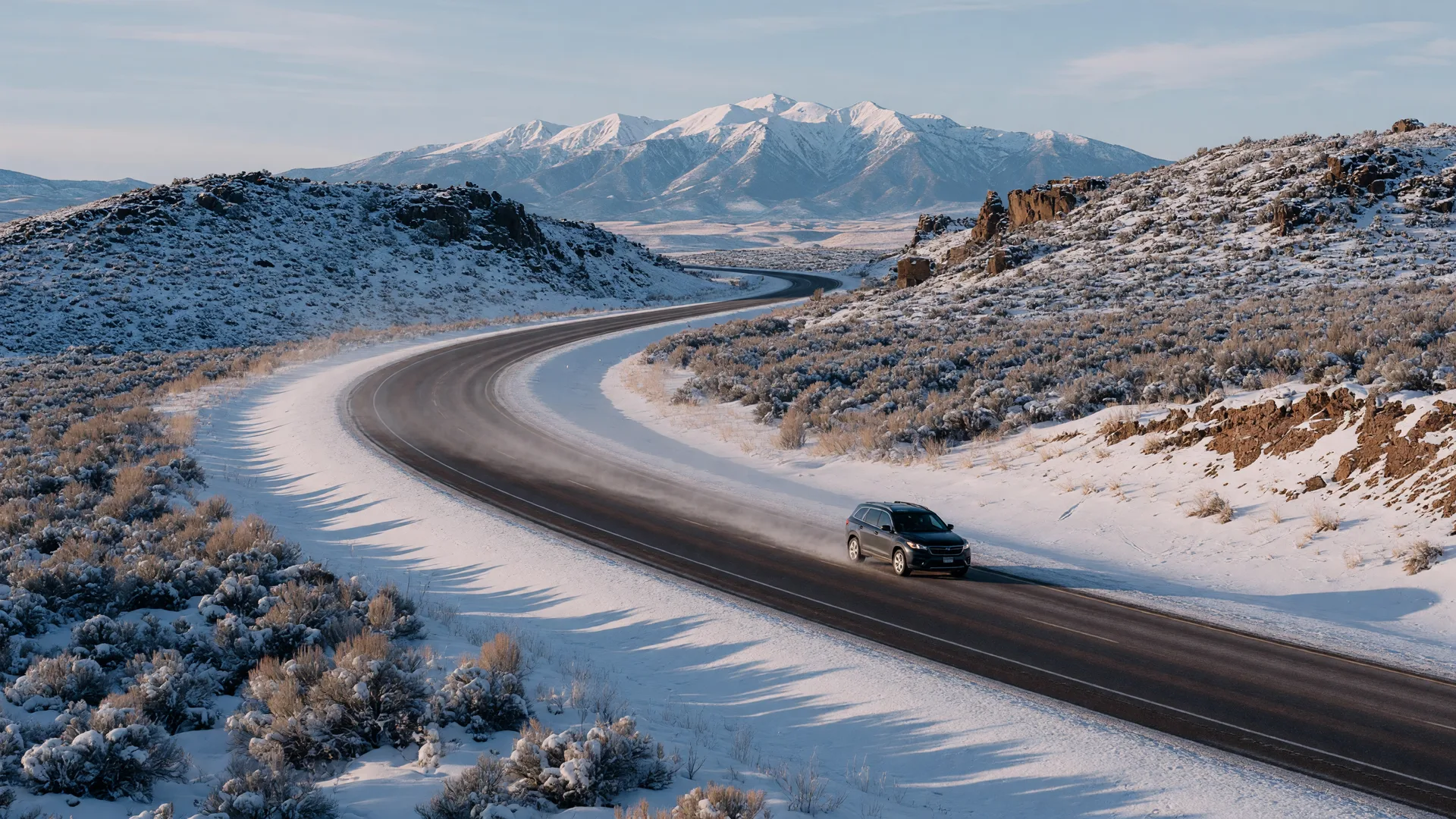
The drivers who handle Idaho winters best are usually the ones who prepared before the first storm. Winter driving in the Boise area is not complicated, but it rewards planning: the right tires, a full tank, a stocked emergency kit, and a pace that matches the conditions. This guide covers the preparation, the gear to carry, and what to do if you are stopped.
Idaho winters are real. The valley gets snow most winters, the Boise Foothills and nearby mountain passes get much more, and a sunny morning can turn into a whiteout by afternoon. Roads across the state range from city streets that are plowed quickly to two-lane highways and mountain passes that can stay slick for days. Traction can change within a few miles, which is why preparation matters more than any single piece of gear.
Tires, chains, and traction
Your tires are the only part of the car that touches the road, so winter driving starts there. All-season tires in good condition handle the Boise area's typical winter weather, and studded snow tires add grip on ice and packed snow. Idaho Code § 49-948 prohibits studded tires on public highways from May 1 through September 30, so they're allowed October 1 through April 30. If you run them, have them removed once roads are bare, because studs wear pavement and handle poorly on dry roads.
Beyond the tires themselves, the Idaho State Police advise carrying chains, a tow rope, and traction aids such as sand or cat litter, so you have a way to move when the grip runs out. Chains matter most on mountain passes and on roads that stay unplowed for hours. Idaho 511, the Idaho Transportation Department's traveler information service, posts current road conditions, closures, and any chain requirements on state highways, and checking it should be part of every winter trip longer than a few miles.
Fuel: keep the tank full
Keep your fuel tank full in winter, as the Idaho State Police recommend, so you can stay warm if you're stopped. A full tank also gives a cold engine and battery the best chance of starting on a subzero morning, and it keeps you from running out on a stretch of road where help is not close. Make it a rule in winter: when the gauge hits a quarter tank, fill up before the next drive.
Build an emergency kit
If a storm catches you, the gear in your trunk matters more than how far you planned to drive. The Idaho State Police recommend that drivers carry an emergency kit through the winter months, and the table below lists the essentials for warmth, visibility, and basic needs if you are delayed for hours.
| Item | What it does |
|---|---|
| First aid kit | Treats cuts, scrapes, and minor injuries while you wait for help. |
| Food | Non-perishable snacks and energy bars keep you fueled through a long delay. |
| Water | Keeps you hydrated if you are stopped for hours; rotate it a couple of times a season. |
| Blanket or sleeping bag | Retains body heat when the engine is off in extreme cold. |
| Flashlight with extra batteries | Lights up the car and makes your vehicle visible to other drivers. |
| Jumper cables | Restarts a dead battery and helps other drivers in the same spot. |
| Ice scraper and snow brush | Clears windows, mirrors, and lights before you drive. |
| Small shovel | Digs snow away from the wheels if you get stuck. |
| Sand or cat litter | Adds traction under the drive wheels on ice or packed snow. |
| Phone charger and cables | Keeps your phone powered so you can call for help. |
A kit only helps if it is in the car. Stock it in October, check it after the first storm, and add anything your household needs, such as medication, a power bank, or supplies for a pet. Most winter driving problems are solved before the tow truck ever arrives, and the kit is what makes a long stop a nuisance instead of an emergency.
Before you leave
Before a winter drive, look at the forecast and the road report. Idaho 511 shows closures, chain requirements, and current conditions on the state highway system, and the National Weather Service forecast tells you what is moving in. If conditions look bad, the strongest decision is often to wait; no appointment, closing, or flight is worth a slide off the highway. When you do drive, give yourself extra time so you are never tempted to rush in bad weather.
If you get stopped
Before you leave, tell someone your route, especially through areas without cell service, and check in when you arrive, as the Idaho State Police advise. Large parts of Idaho, including stretches of the mountain passes and rural highways around the Boise area, have no cell coverage, so the person who knows your route and expected arrival time is the one who can raise the alarm if you go quiet.
If you are stopped or stuck in a storm, the priority is staying safe until help arrives. Stay with your vehicle, which is your shelter and the easiest thing for responders to find. Run the engine in short intervals to stay warm and keep the exhaust pipe clear of snow so carbon monoxide cannot back up into the cabin. Crack a window for fresh air, turn on your hazard lights, and tie something bright to the antenna or door handle so the vehicle is visible. Call for help if you have service; if you do not, follow the plan you shared before you left, because the person who knows your route is how help gets moving your way.
Adjust your driving to the conditions
Once you are moving, the conditions set the pace. Posted speed limits are set for dry pavement, so on snow and ice the right speed is often well below the limit. The Idaho State Police point out that speed limits do not mean safe speeds in winter weather, and that drivers should leave plenty of room for stopping. Brake gently and early, ease into acceleration, and make any steering changes smoothly, because sudden inputs are what break traction and start slides.
Bridges, overpasses, and shaded curves freeze first, so treat them with extra care even when the rest of the road looks clear. Black ice is hardest to spot on cold, clear mornings, especially on the shaded side of the roadway. Four-wheel drive and all-wheel drive help you get moving, but they do not help you stop, so they are no excuse for speed. In a skid, keep your eyes where you want to go, ease off the accelerator, and steer gently in that direction.
Sylvia's take
Winter in the Boise area is very manageable when you plan around storms rather than driving straight through them. If you're new to Idaho winters, give yourself a few extra minutes, ease off the gas, and check 511 before you leave. And for home buyers moving from warmer climates, it's worth thinking about a garage or covered parking when you shop, because clearing ice off a car in the dark is nobody's favorite morning.
Frequently asked questions
Are studded tires legal in Idaho, and when?
Yes. Idaho Code section 49-948 allows studded snow tires from October 1 through April 30, when snow, ice, or other conditions require them for safety. Remove them when roads are bare, since studs wear pavement and reduce traction on dry roads.
Do I need tire chains in Idaho?
Idaho's legal chain requirement applies mainly to large commercial vehicles on certain mountain passes. For passenger vehicles, chains are a practical safety tool on snow-covered roads, and Idaho 511 reports current conditions and any chain requirements. Carrying chains, a tow rope, and traction aids is still good practice, as the Idaho State Police recommend.
What should I keep in my car for an Idaho winter?
The essentials include a first aid kit, food, and water, plus a blanket, a flashlight with extra batteries, jumper cables, an ice scraper, a small shovel, sand or cat litter, and a phone charger. Stock the kit in the fall and check it after the first storm.
What should I do if I am stopped on the highway in a storm?
Stay with your vehicle, run the engine in short intervals and keep the exhaust pipe clear of snow, crack a window, turn on your hazard lights, and call for help. Before you leave, tell someone your route and check in when you arrive, especially where cell service drops.
How do winter conditions in the Boise area compare with mountain passes?
The valley gets manageable snow most winters, but conditions change fast, and nearby passes get significantly more snow and ice. Preparation and a cautious pace apply everywhere, and they matter most the farther you get from the valley floor.