
 By Sylvia Dorrance, REALTOR®, eXp Realty
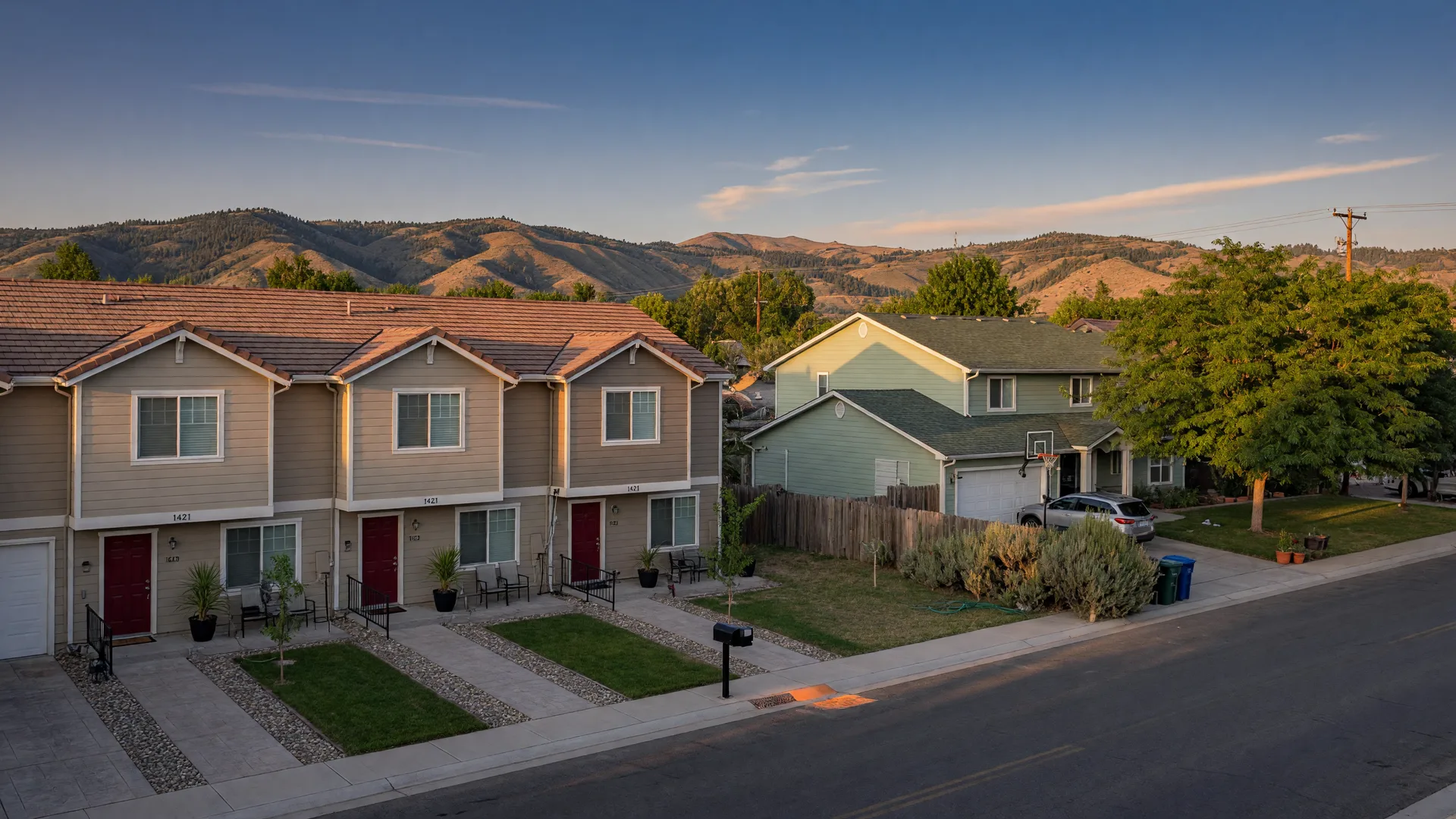
If you are house hunting in the Boise area, known locally as the Treasure Valley, the first real fork in the road is often not price range or neighborhood. It is structure: townhome or single-family home. Both appear in the same listings, sit in the same communities, and sometimes share the same builders. Yet they behave very differently over the years you own them. The decision shapes your monthly costs, your weekends, your privacy, and eventually your resale. This post lays out the differences without the jargon, so you can match the structure to the way you actually live.
The definitions
Start with the definitions. A single-family home is a detached house on its own lot: you own the building and the land beneath it, and no one shares a wall, a roof, or a maintenance obligation with you. A townhome is an attached home that shares at least one wall with a neighbor. Townhomes are usually two or more stories, built in rows or clusters, and almost always governed by a homeowners association. That one fact, the shared wall and the shared rules, drives nearly everything else in this comparison.
What you actually own
The ownership question is the piece that is easiest to misunderstand. In a condo-style townhome, you own the interior of your unit, and the land, exterior walls, roofs, driveways, and common areas are owned jointly through the association. In a fee-simple townhome, you own the structure and the land under your unit, with the HOA still responsible for shared elements such as common driveways and landscaping. The practical effect is similar: an HOA sets the rules and collects dues to maintain the shared parts of the community. The reason the distinction matters is financing. If the townhome is part of a condominium, FHA and VA require the project to be approved. Fee-simple townhomes usually follow standard single-family rules. Ask your lender to confirm before you write an offer.
The monthly bill, compared
The monthly cost picture is where the two diverge most in practice. A single-family homeowner carries the full cost of the roof, siding, gutters, driveway, and landscaping, spread out over years in the form of repairs and replacements. A townhome owner pays HOA dues instead, and those dues usually cover exterior upkeep, common-area maintenance, and sometimes insurance and amenities such as a pool or clubhouse. The trade-off is real: the townhome owner gets predictable monthly costs and few weekend projects, while the single-family owner gets full control but carries the risk of a big-ticket repair with no notice. Neither is wrong, but they are different financial lives, and the HOA dues should be treated as a permanent part of the budget, not an optional line item.
Townhome vs. single-family at a glance
| Consideration | Townhome | Single-family |
|---|---|---|
| Structure | Attached, shares at least one wall | Detached, stands alone |
| What you own | Unit, plus a share of common areas in condo-style communities | Building and the land under it |
| Exterior upkeep | HOA-managed and covered by dues | Your responsibility |
| Monthly costs | HOA dues plus insurance and utilities | A maintenance fund plus insurance and utilities |
| Privacy | Shared walls and closer neighbors | No shared walls |
| Outdoor space | Patio or small yard, less to maintain | Private yard, with more to maintain |
| Community rules | HOA rules on paint, parking, and rentals | Fewer restrictions; some neighborhoods have HOAs, many do not |
| Financing | FHA and VA project approval if the townhome is a condominium | Standard property review |
How daily life differs
Daily life is where the abstract differences become concrete. Townhomes usually have a patio or small yard and less exterior upkeep; detached homes usually have a private yard and more space between neighbors. The shared-wall reality means you will hear neighbors sometimes, and in a townhome the HOA decides things like parking rules and paint colors. A detached home gives you a private yard, room for a garden or a workshop, and more freedom to change the exterior. At the same time, many single-family homes in the Boise area are also part of HOAs, especially in master-planned communities, so it is worth reading the neighborhood's rules before you buy either way. If schools matter to your decision, the attendance areas of the local districts can be looked up directly: Boise schools at boiseschools.org/attendance-areas and West Ada at westada.org/page/attendance-areas.
What to check while you tour
While you tour, a few specifics are worth checking. For a townhome, ask for the HOA's budget, reserve fund, and recent meeting minutes; a healthy reserve fund is what pays for the roof and the parking lot when they wear out. For a detached home, ask about the age and condition of the roof, furnace, water heater, and windows, since those are the items that become your repair bills. In either case, confirm what the monthly numbers really include: which utilities are separate, what the insurance covers, and whether any special assessment is pending. Parking matters too: townhomes often have assigned spaces or a short driveway, while detached homes usually have a garage and driveway on the lot. These details rarely show up in listing photos, but they shape the monthly bills and the daily routine more than the floor plan does.
The market has room for both
The market in the Boise area has room for both structures, and new townhome and single-family communities are being built across the Boise area. Resale strength comes down to the specifics of the community, the condition of the home, and current demand in that neighborhood at the time you sell. For the latest Ada County numbers, see What's happening in the Boise area housing market right now.
So how do you decide?
Start with your calendar, not your curb appeal. Count how many weekends you actually enjoy yard work and home projects, then compare that to how you want to spend a Saturday. Add up the true monthly cost of each option, including HOA dues for the townhome and a realistic maintenance fund for the detached home. Look at the HOA's rules and finances before you fall in love with a townhome, because the association shapes your experience more than the floor plan does. And visit both at the times of day you would actually live there, because noise, parking, and light behave differently at 7 a.m. and 7 p.m. If you want the details on what each loan type can do, the Consumer Financial Protection Bureau's Owning a Home guide walks through the full mortgage process step by step.
Sylvia's Take
This is a lifestyle decision as much as a financial one. Before you tour, add up the true monthly cost of each option, read the HOA documents, and think about how you want to spend your weekends: on a yard and projects, or with more of the exterior upkeep handled for you. Tell me what matters most, and we'll focus the search on the right kind of home.
Frequently asked questions
Do all townhomes have an HOA?
In the Boise area, most townhome communities have an HOA, because the association maintains the shared walls, roofs, driveways, and common areas.
Can I get an FHA or VA loan on a townhome?
Often yes, but if the townhome is legally a condominium, the project must be approved by FHA or VA. Fee-simple townhomes usually follow standard single-family rules. Ask your lender to confirm before you make an offer.
Do I own the land under a townhome?
In a fee-simple townhome, yes. In a condo-style townhome, you own the interior of the unit and share ownership of the land and common areas through the association.
Is a townhome easier to sell than a single-family home?
It depends on the specific community, the home's condition, and current demand. For the latest Ada County numbers, see What's happening in the Boise area housing market right now.