
 By Sylvia Dorrance, REALTOR®, eXp Realty
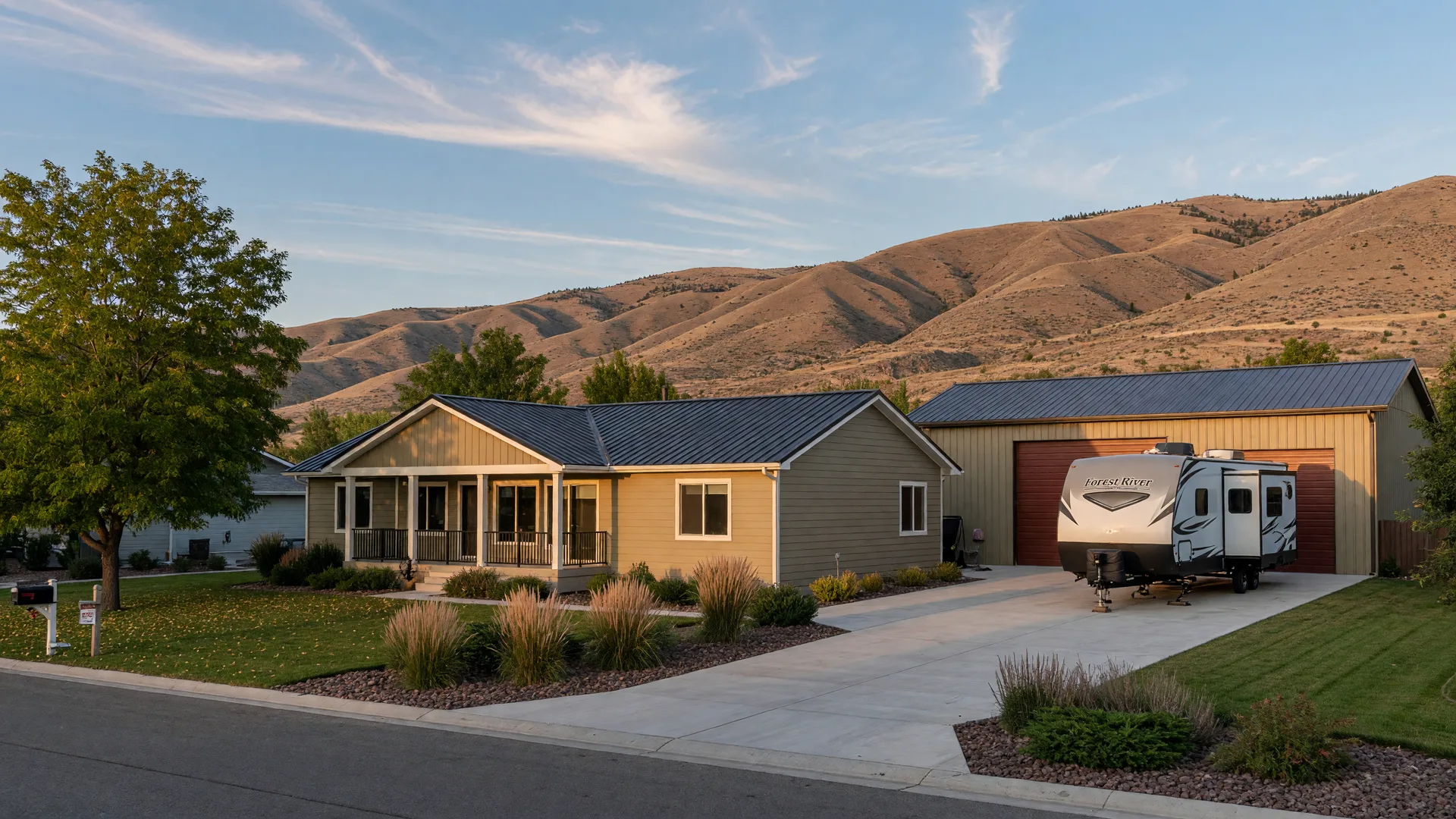
A shop for tools, a spot for a fifth wheel, a pad for a boat: for many buyers in the Boise area, known locally as the Treasure Valley, these features decide which home wins. The mistake is assuming the feature comes with the house. Whether you can keep an RV at the curb, park a trailer beside the garage, or build a shop in the backyard is decided by three separate sets of rules: the city's zoning code, the neighborhood's covenants, and the agency that owns the street. All three are public, and all three are checkable before you buy. Here is where each rule lives, quoted from the codes, and what the main cities in the Boise area currently say.
Accessory structures and shops
In Boise, a shop building is an accessory structure, and the standards live in Boise City Code Section 11-06-07 on accessory uses and structures. The code requires that an accessory building not be used unless the main building is also in use, that the accessory use or structure be on the same lot as the principal use, and that both be under the same ownership. The list of commonly allowed accessory uses is in Table 11-06.1 of the code, and residential districts generally allow the structures that typically go with a home, such as a detached garage, shed, or hobby shop. What an accessory shop is for matters too: accessory uses must be subordinate to the home, so a shop used as a commercial business in a residential district is a different question entirely, governed by the commercial use standards in the code.
Where a shop can go
The location of a shop or garage on the lot is set by the same code's lot and building design standards, which cover setbacks, height, and lot coverage for the zoning district. Detached accessory structures may also be subject to design review depending on the district.
RV, boat, and trailer parking in Boise
Boise's street rule is stated directly in the city code. Section 6-10A-11, Extended Parking Prohibited, reads: "No person shall park a vehicle upon any street, alley or public property for a period of seventy two (72) hours or longer unless specifically allowed by permit." The City of Boise's own parking guidance adds the on-property rule: recreational vehicles cannot be parked in any required setbacks. The practical translation: an RV needs a place on the property that is not a required setback, and the street is not a long-term storage option.
Eagle
Eagle's rules appear in Eagle City Code Section 8-3-2, Supplemental General Provisions. On storage, the code says: "Automotive vehicles, trailers, or recreational vehicles of any kind or type without current license plates shall not be parked or stored on any property other than in a completely enclosed building, carport, or within an approved storage facility," and such vehicles shall be operational. On curbside parking, the code says: "No recreational vehicles or personal recreation items may be parked more than seventy two (72) consecutive hours in front of, or in the case of corner lots, on the secondary street side, of any property," and again, such vehicles shall be operational.
Star
Star's code enforcement page summarizes the city's published rules. Extended parking is not permitted on any street or alley for seventy-two (72) hours or longer, and no overnight parking of vehicles is permitted on public property. Parking in alleys is not allowed unless loading or unloading of material and/or passengers, and loading is allowed for no more than thirty (30) minutes. Star's zoning code also addresses vehicle parking on vacant private property and within rights of way, so the rule set for an RV or trailer in Star is the combined result of both the traffic code and the zoning code.
Meridian
Meridian's alley rule is stated in Section 7-2-4 of the Meridian City Code: "No person shall park any motor home, recreational vehicle, trailer, or vehicle within an alley, except while actively engaged in the expeditious loading and unloading of passengers, supplies and merchandise." Each city's ordinance is distinct, and Meridian's full off-street parking rules are in its municipal code, so the specific district matters for a Meridian property.
Unincorporated Ada County
If the property sits outside city limits, Ada County's residential parking standards apply. Ada County Code Section 6-5-3, Parking of Vehicles in Residential Areas, limits parking on streets in residential areas of unincorporated Ada County to two hours for certain vehicles, including trailers and recreational vehicles, with exceptions spelled out in the section. Read the section for the exact terms. County-zoned acreage often has more room for a shop and parking; check the county zoning for the specific parcel.
HOAs and CC&Rs
HOA covenants add to the city or county rules; they do not replace them. Declarations of covenants, conditions, and restrictions routinely add rules about where boats and RVs may be stored, whether they must be screened, what colors a detached shop may be painted, and whether shop uses are allowed at all. The Ask Sylvia answers on CC&Rs and on HOA fees cover how declarations work and what fees fund, and Idaho's Homeowner's Association Act sets the statewide framework. The declaration for the specific neighborhood is the document to read, and the seller or the HOA should provide it.
How to check a specific property
Before an offer: confirm the zoning district, read the city or county code for that district, get the declaration and CC&Rs, verify the lot dimensions and setbacks against the proposed use, and when parking is the question, look at the actual street: whether it is a city street or an ACHD street, and whether any parking restrictions apply. Cities publish zoning maps, and code enforcement offices answer questions about current rules. A title company can pull the recorded covenants. Every one of these checks is verifiable for the exact address, which is the point: the rules are public, so the answer is never a guess.
City-by-city snapshot
| City | Shop/accessory rules | RV, boat, and trailer parking |
|---|---|---|
| Boise | Accessory structures allowed under Code 11-06-07, subordinate and same lot | No parking on a street, alley, or public property for 72+ hours unless permitted (6-10A-11); no RVs in required setbacks (city parking guidance) |
| Eagle | Accessory structures under zoning; see Code 8-3-2 | No more than 72 consecutive hours in front of a property; unlicensed vehicles must be enclosed |
| Star | Zoning code governs accessory uses | No extended parking on streets or alleys for 72+ hours; alley parking only for loading, max 30 minutes |
| Meridian | Unified Development Code (Title 11) | No motor home, RV, trailer, or vehicle parking in alleys except loading/unloading (7-2-4) |
| Unincorporated Ada County | County zoning governs | Recreational vehicles and trailers limited on residential streets (6-5-3) |
The takeaway
A shop or RV space is a feature you buy twice: once in the price and once in the rules. The city or county code decides what the property allows, the HOA declaration decides what the neighborhood allows, and the street jurisdiction decides what the curb allows. Check all three for the exact address, and the home you choose will be the one that truly fits.
Sylvia's take
Before you fall for a great shop or RV pad, check the rules for that exact address: the zoning district, the city's parking code, and the CC&Rs. A quick look before you make an offer can save a big surprise later.
Frequently asked questions
Can I park an RV on a Boise street?
No person shall park a vehicle upon any street, alley, or public property for 72 hours or longer unless specifically allowed by permit (Boise City Code 6-10A-11), and the City of Boise's parking guidance says RVs cannot be parked in required setbacks.
Can I build a shop in my backyard in Boise?
Detached garages and shops are allowed as accessory structures in residential districts under Boise City Code Section 11-06-07, subject to setback and design standards.
How long can an RV stay parked in front of a home in Eagle?
No more than 72 consecutive hours, and vehicles without current plates must be kept in an enclosed building, carport, or approved storage facility (Eagle City Code 8-3-2).
Do HOA rules affect RV and shop parking?
Yes. Declarations of covenants can add rules about parking and storage, so the neighborhood's CC&Rs must be read alongside the city code.