
 By Sylvia Dorrance, REALTOR®, eXp Realty
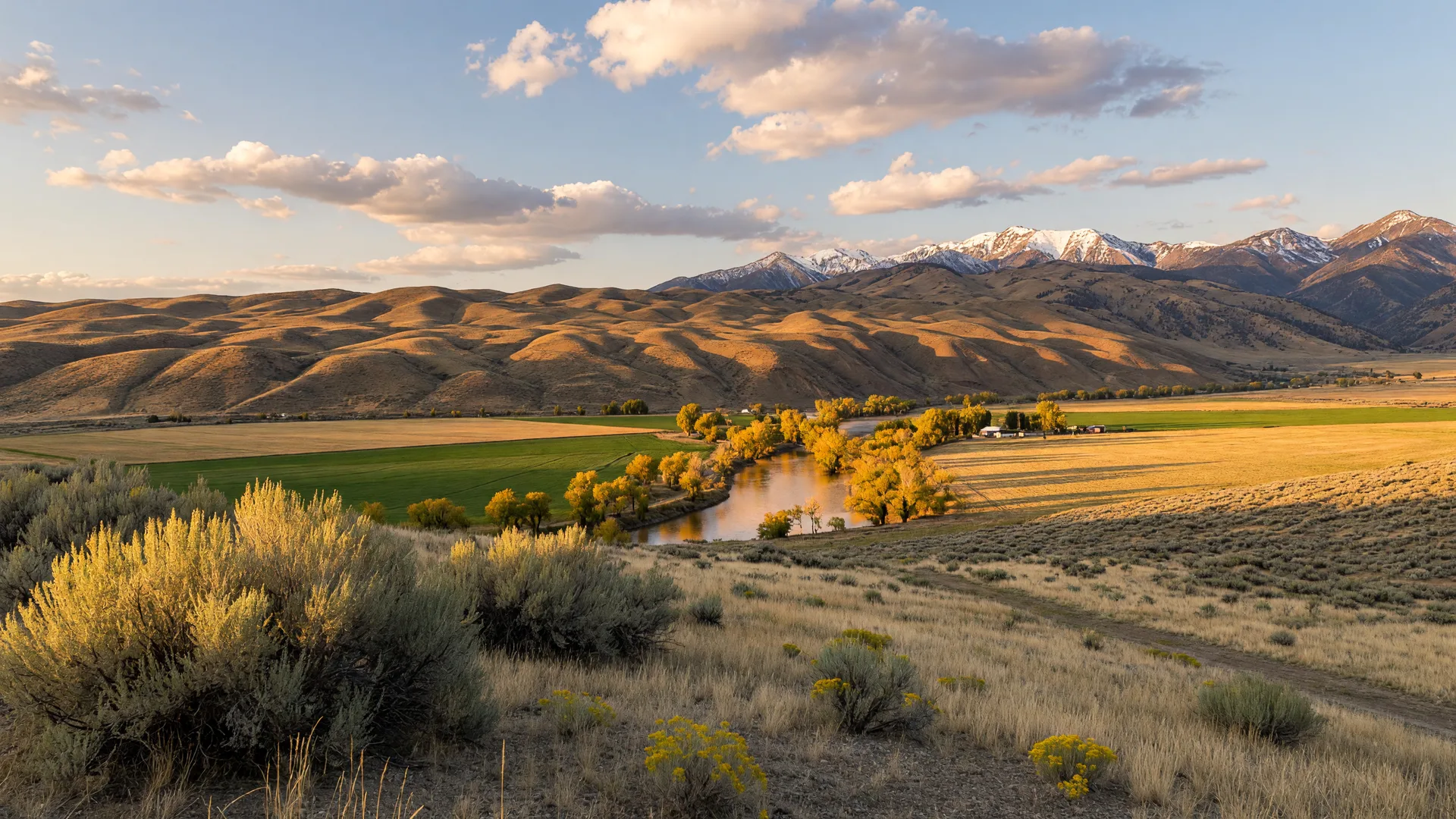
Four distinct seasons are one of the best things about living in the Boise area, known locally as the Treasure Valley. The climate is semi-arid, high-desert country: the National Weather Service's Boise climate summary puts average annual precipitation at just over 11 inches, with the bulk of it, roughly three quarters, falling between November and May. That pattern is the whole story of Boise weather: a cool, wetter half of the year and a warm, mostly dry half, with real seasons in between.
Winter: cold, occasionally snowy, sometimes foggy.
December, January, and February are the coldest months. Under the NOAA 1991-2020 normals, average January highs sit near 39°F with overnight lows near 25°F. Snowfall is modest by mountain standards: the annual normal at Boise Air Terminal is 17.6 inches, with December averaging about 5.6 inches and January about 5.3. The NWS notes that a persistent temperature inversion with snow cover can keep the west end of the valley several degrees colder than Boise, which is why winter mornings often start under fog. For the rare extremes: the all-time record low is 25 degrees below zero, set on December 22, 1990.
Spring: the season of change.
March through May bring the tail end of the wet season, so expect rain showers, occasional March snow (about 1.2 inches on average), and a rapid warm-up: average highs climb from the mid-50s in March to the low 70s by May. The average last freeze of spring lands around early May, based on NWS Boise freeze data from the 1991 to 2020 normals, the marker gardeners and landscapers watch before planting. Spring weeks can swing from coat weather to short sleeves in a single day.
Summer: hot, dry, and long.
June through August is the dry season, with little rain and low humidity. July is the hottest month, with an average high near 93°F per the 1991-2020 normals and overnight lows near 60, which means cool evenings even after hot days. The all-time record high at Boise is 111°F, set on July 19, 1960. This is the season of irrigation, shade, and early-morning outings, with the occasional afternoon thunderstorm rolling off the mountains.
Fall: the reward.
September brings average highs near 80°F, usually dry and clear. October cools quickly, and the average first freeze of fall arrives around early October, the signal that irrigation systems and summer annuals are winding down. November turns colder, averaging about 2 inches of snow, as the wet season reasserts itself. Fall color, from the greenbelt to the foothills, makes autumn a favorite for walks and open houses.
Season-by-season snapshot
| Season | Months | Average highs | Precipitation and snow | Freeze dates |
|---|---|---|---|---|
| Winter | Dec-Feb | 39-46°F | About three-quarters of annual precipitation falls Nov-May; December snow ~5.6", January ~5.3", February ~3.3" | Freeze season, with fog and inversion common |
| Spring | Mar-May | 56-72°F | Wet-season tail; light March snow ~1.2" | Last spring freeze around early May |
| Summer | Jun-Aug | 81-93°F | Warm-season months mostly dry | Frost-free |
| Fall | Sep-Nov | 49-80°F | Wet season returns; November snow ~2.0" | First fall freeze around early October |
Why it matters for your home.
The climate shapes how homes work in the Boise area. Summer heat makes efficient cooling and shade important, winter freezes make insulation and window quality matter, and the dry climate means low-maintenance landscaping thrives while lush lawns lean on irrigation. For home buyers across Boise, Meridian, Eagle, and Star in the Boise area, the practical takeaway is comfort planning: sun exposure in summer, driveway and walkway clearing in winter, and a yard that works in all four seasons.
Where to get the numbers.
The National Weather Service office in Boise publishes the local climate summary, freeze data, daily forecasts, and historical records, all free and official. NOAA's National Centers for Environmental Information publishes the 1991 to 2020 U.S. Climate Normals, the standard 30-year averages behind the figures above. Check current conditions at weather.gov/boi , because averages are a guide, not a guarantee.
The bottom line.
If you like real seasons, the Boise area delivers: snowy winter mornings, green and unpredictable springs, long hot summers, and crisp, colorful autumns. The averages are mild enough to enjoy all four, and the official agencies keep the data free and current. Know the pattern, plan for the extremes, and the weather becomes one more reason the Boise area feels like home.
Sylvia's take
When you tour homes, think about the seasons. Notice which way the house faces for summer shade, how the driveway handles winter, and whether the yard has irrigation for the dry months.
Frequently asked questions
How much snow does Boise get in a typical year?
The 1991-2020 normal at Boise Air Terminal is 17.6 inches, with December and January the snowiest months, each averaging roughly 5 inches.
What are Boise's all-time temperature extremes?
Record high 111°F on July 19, 1960, and record low 25 below zero on December 22, 1990, per NWS Boise.
When is the growing season in the Boise area?
NWS Boise freeze data puts the average last spring freeze around early May and the average first fall freeze around early October.
When does the Boise area get most of its precipitation?
About three-quarters of the annual total falls between November and May; the warm-season months are mostly dry, per NWS Boise.