
 By Sylvia Dorrance, REALTOR®, eXp Realty
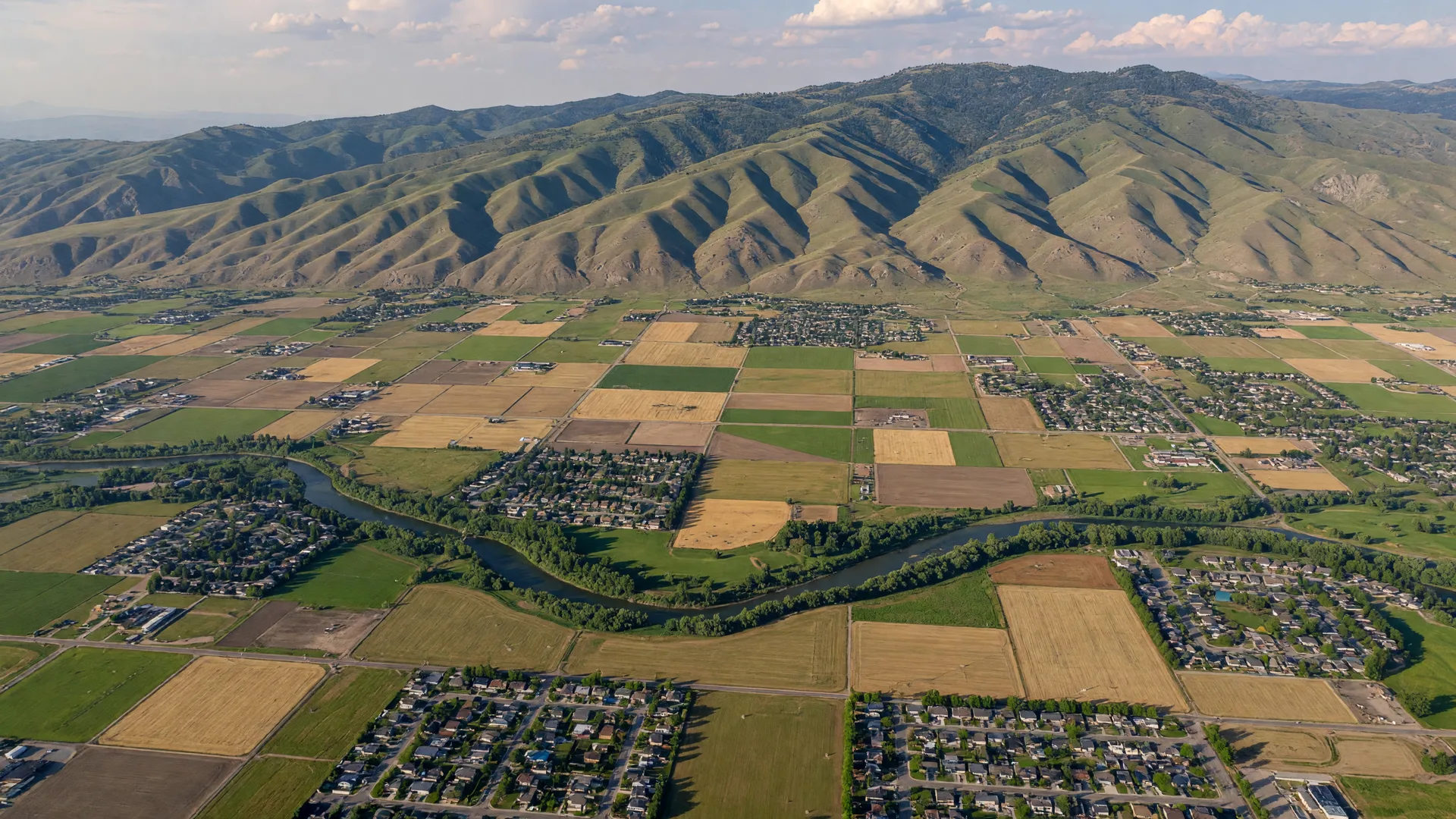
Eagle and Star sit on the western side of the Boise area, known locally as the Treasure Valley, close enough that people often compare them, and different enough that the comparison matters. Both are Ada County cities with their own downtowns, parks, and river frontage, but they were shaped differently: Eagle grew into a community of large lots, river access, and established neighborhoods, while Star has seen rapid residential growth on former farmland. The way to compare them, as with any two places, is by the homes and the places themselves: population, lot sizes, new construction, amenities, and how each connects to the road network.
Where they sit
Eagle lies along the Boise River between Boise and Star, roughly in the middle of the corridor. Star sits to the northwest along State Highway 44, closer to where SH-44 meets the new SH-16 corridor. Both connect to the regional system through SH-44; ITD's District 3 overview calls SH-44 "a vital east-west corridor north of the Boise River that connects many communities from I-84 in Canyon County to the eastern Treasure Valley." The SH-16 extension under construction, which ITD says is on track to open by 2027, will provide a limited-access north-south route near both cities. SH-44 runs north of the Boise River, and both cities' parks and newer neighborhoods draw on that river corridor for recreation and open space.
Population
According to the U.S. Census Bureau QuickFacts population estimates for July 1, 2025 (V2025), Eagle's population is 34,658 and Star's is 20,874. These are the Census Bureau's official annual estimates, published on its QuickFacts pages for each city. Population alone does not tell you much about day-to-day life, but it is the starting point for understanding each city's scale and services. The Census Bureau revises these estimates each year, and the QuickFacts page for each city is the official published figure to cite. Star's population change has been the larger story: the city grew 84.6% from April 1, 2020 to July 1, 2025, per Census QuickFacts (V2025).
Acreage and lot sizes
Lot sizes vary widely within both cities, and that is the detail to compare house by house. Part of Eagle was developed with larger lots, river-front parcels, and acreage tracts, while other parts have conventional subdivision lots. Star, built largely on agricultural land, has a mix of newer subdivisions and larger parcels, and some areas still have an unincorporated feel. The Ask Sylvia answer on buying land or acreage in the Boise area , linked within this post, covers the practical questions that matter for any larger parcel: irrigation water, wells, septic, zoning, and access. For any specific property, the lot size is on the parcel record and the zoning is on the city's map, so the answer is always verifiable for the exact home you are looking at. Irrigation water, wells, septic, zoning, and access are the specifics that matter most on larger parcels, and each one can be checked for the exact property before you make an offer.
New construction
Both cities have active new construction, and the character of the new building differs. Eagle's newer neighborhoods tend to cluster around the established parts of town and the river corridor, and its remaining development is influenced by the city's large-lot heritage. Much of Star's recent growth is in newer subdivisions, many with community parks, paths, and HOAs. Star grew 84.6% from April 1, 2020 to July 1, 2025, per Census QuickFacts (V2025). The new construction Ask Sylvia answer covers how to evaluate a builder, a timeline, and a warranty; that reading is more useful than a generic description of either city. Builder track records, timelines, and warranties differ by neighborhood, which is why the linked answer frames them as questions to ask rather than assumptions to make.
Community amenities
Both cities have parks, river access, and community programs, and the details are best checked on each city's own pages and on the community pages here: the Eagle community page and the Star community page describe the local character, parks, and amenities. Eagle's identity is tied to the Boise River, its riverfront parks, and its established commercial streets. Star's amenities are newer, built with its recent neighborhoods: parks, paths, and community facilities that have grown with the population increase shown in the census figures above. Eagle's established commercial streets and Star's newer community facilities serve the same daily needs, and both cities' park systems include river access.
Commute and roads
SH-44 is the main link between the two cities and the region, and SH-16, the new corridor opening by 2027 per ITD, will add a limited-access north-south route near both. I-84 access runs through the southern Boise area via connecting roads. Travel time depends on where in each city you start and where you are going; the road network is the part that is public, documented, and stable enough to plan around. For current housing market conditions, this post links to the Ask Sylvia answer titled What's happening in the Boise area housing market right now , since this post avoids monthly figures.
Schools and attendance areas
Attendance areas are assigned by address in both cities. The West Ada School District attendance-area lookup , linked within this post, is the authoritative way to determine which attendance area a specific address falls in, and district boundaries can change. The place to verify attendance is the district's own tool for the exact property. Because assignments can change as the district plans capacity, the answer for one address is not automatically the answer for the lot next door.
| Feature | Eagle | Star |
|---|---|---|
| Population (Census V2025, July 1, 2025) | 34,658 | 20,874 |
| Setting | River corridor, established neighborhoods | Newer residential growth on former farmland |
| Acreage and lots | Mix of large lots and subdivisions, river parcels | Mix of new subdivisions and larger parcels |
| New construction | Active, clusters near established areas | Active, concentrated in newer neighborhoods |
| Regional roads | SH-44; SH-16 corridor nearby | SH-44; SH-16 corridor nearby |
| Amenities | River parks, established commercial streets | Newer parks, paths, and community facilities |
The takeaway
The honest comparison of Eagle and Star is the one you verify yourself: look up the census numbers, check the lot size and zoning for the specific property, read the new construction guidance, and drive both cities at the time of day you would actually commute. Both are well-connected, growing Ada County communities with river access and their own character, and the right one is the one whose homes and places match how you want to live. For current home listings in either city, the search links below take you straight to the active inventory. The census figures, parcel records, zoning maps, and attendance-area lookup are all public, so the comparison can rest on documents rather than impressions.
Sylvia's take
Eagle and Star sit side by side, but the details differ street by street. Check the lot size, zoning, and irrigation for the exact property, then drive both at the time you'd actually be on the road.
Frequently asked questions
What is the population of Eagle and Star?
Per U.S. Census Bureau QuickFacts estimates for July 1, 2025 (V2025): Eagle 34,658 and Star 20,874.
Which city has larger lots?
Both have a mix of lot sizes; the specific parcel record and zoning for each property are the authoritative sources, and the acreage Ask Sylvia answer covers what to consider on larger parcels.
When will SH-16 open?
ITD says the SH-16 extension between SH-44 and I-84 is on track to open in 2027.
How do I find out which attendance area an address is in?
Use the West Ada School District's attendance-area lookup for the exact property; boundaries are set by the district.