
 By Sylvia Dorrance, REALTOR®, eXp Realty
The residency steps are the same no matter which state you come from: you have 30 days from residing in Idaho to exchange your out-of-state driver's license with the Idaho Transportation Department, your vehicle must be titled and then registered through the Ada County motor vehicle offices (with locations in Boise, Meridian, and Star), voter registration runs through the Secretary of State's VoteIdaho portal, and the homeowner's exemption, filed with the county assessor, can exempt part of a primary home's value from property tax. The full walkthrough, with every official link, is the existing post on driver's licenses, vehicle registration, and voter registration in Idaho . What follows is the part of the move that is actually about the place.
Taxes and costs, briefly. Both Colorado and Idaho have a state income tax, and a mid-year move usually means a part-year resident return in each state. For current rates, see the Colorado Department of Revenue and the Idaho State Tax Commission. On overall price levels, the U.S. Bureau of Economic Analysis publishes Regional Price Parities, which express each state's price level as a percentage of the national average of 100. In BEA's 2024 state table, Idaho's all-items RPP is 95.5 and Colorado's is 103.1, both measured against that national benchmark. This is general information, not tax advice, and a tax professional can model the two states side by side.
Utilities are local. Idaho Power and Intermountain Gas serve much of the Boise area; confirm the providers for a specific address, because not every home is on both. Water, sewer, trash, and recycling are billed by the city or district serving the property, and the Ask Sylvia answer on setting up utilities after moving walks through the order of operations. On acreage, irrigation and domestic water are separate systems, which is where the next sections come in.
A valley climate, not a mountain one. If you are coming from the high country, the first surprise is that the Boise area is not a mountain town. It is a valley floor, and the National Weather Service describes the climate as semi-arid with relatively mild conditions, noting that the Rocky Mountains to the east act as a barrier to cold shallow air masses moving southward from Canada in winter, and that the surrounding ranges shape the valley's weather. Where Colorado mountain weather is driven by altitude, Treasure Valley weather is driven by the valley itself: the seasons are distinct, the air is drier, and the winters are real without being mountain winters. The dryness is worth knowing too: Boise averages just over 11 inches of rain and melted snow a year at the airport, per the National Weather Service's local climate description, which is exactly why irrigation, covered below, is such a fixture of the landscape. Cold snaps arrive and go, so a garage, a driveway with a plan for snow, and a home that handles freeze-thaw are the practical asks. The National Weather Service's Boise climatology page keeps the official records and extremes, and the Boise-area weather by season post gives the month-by-month picture, which is a better planning document than any memory of Colorado's pattern.
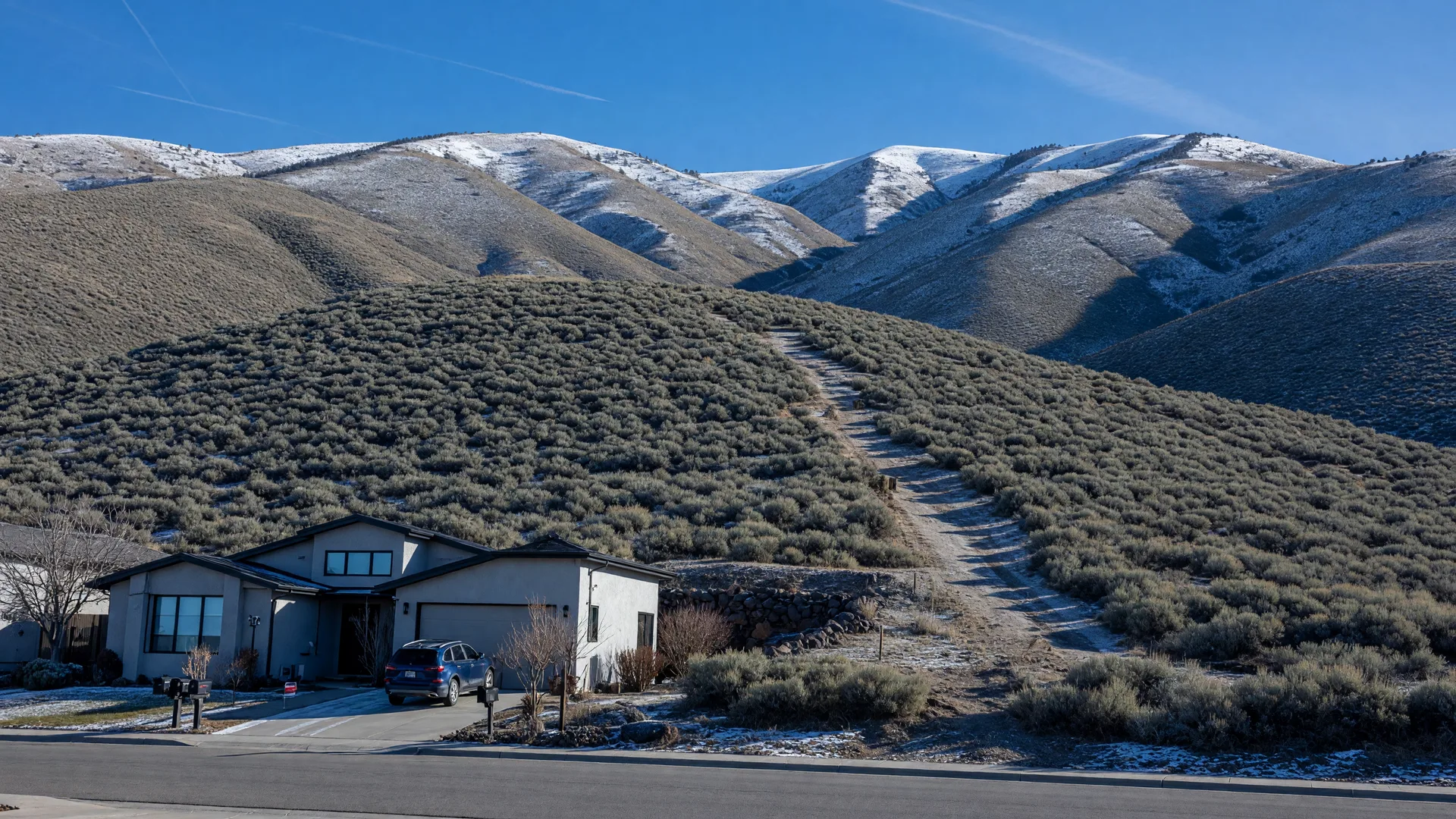
The foothills are part of the address. In the high country, the mountains are farther out; in the Boise area, they sit at the edge of the neighborhood. The Ridge to Rivers trail system, managed by a partnership that includes Ada County Parks & Waterways, maintains more than 190 miles of trails in the foothills. Homes near that open space come with a responsibility that Colorado buyers already understand: wildfire is part of the landscape. The Ask Sylvia answer on defensible space explains what it is and why it matters for homes near the foothills, from managing vegetation around the home to creating a buffer that slows an approaching fire. The trade-off is the setting: trail access from the front door, open views, and a city that treats the foothills as a shared amenity rather than scenery. For a buyer coming from the high country, the foothills are the closest thing to home, and the defensible-space question is the one to ask before buying near them.
Water law, Idaho's version. Colorado arrivals already understand that water in the West is law, not plumbing, and Idaho's system has the same bones with different details. The Idaho Department of Water Resources administers water in the state: it maintains well construction records, which are public and searchable by well tag number (a D followed by seven digits), township-range-section location, physical address, or owner name; it administers water rights; and it maps the irrigation organizations that deliver water across the valley. The key ownership rule is in Idaho Code Section 55-617: when real property is transferred, appurtenant water rights pass with the land unless the seller reserves them. If the right itself changes, such as the point of diversion, place of use, period of use, or nature of use, a transfer application is required through IDWR. On the ground, many properties across the Boise area receive irrigation water from an irrigation district or canal company, separate from any domestic well, with the district setting the assessment and the delivery schedule. Irrigation is seasonal: the same parcel is green during the delivery season and can be dry and dormant outside it, which is the normal rhythm of irrigated land. The Ask Sylvia answer on irrigation water explains how the delivery side works, and the answer on buying land or acreage covers the buyer side of the water question, from wells to rights to irrigation. For a Colorado buyer, none of this is foreign; it is the local version of a system you already know, and the records are public, which is the part that makes it manageable. The practical rule is simple: ask for the water records before you make an offer, just as you would in Colorado, and let the documents, not the listing, tell you how the property is watered.
Checklist
| Task | Where to start |
|---|---|
| Driver's license within 30 days | ITD New to Idaho page |
| Vehicle title and registration | Ada County motor vehicle offices |
| Voter registration | VoteIdaho |
| Income tax filing | Idaho State Tax Commission (and Colorado Department of Revenue for your Colorado return) |
| Homeowner's exemption | County assessor |
| Water rights, well records, and irrigation | IDWR well search; irrigation organizations map; irrigation water answer |
Sylvia's take
Idaho will feel familiar, with the mountains close and water that runs on rules. Winters in the valley are on the mild side, and snow usually doesn't stick around long. For any home with land, spend time on the water records so you know exactly what you're buying.
Frequently asked questions
How soon do I need an Idaho driver's license after moving from Colorado?
Within 30 days of residing in Idaho. The driver's license, vehicle registration, and voter registration post covers the full process with links.
Do I need to register my Colorado vehicle in Idaho?
Yes. The vehicle must be titled in Idaho before it can be registered, and registration runs through the Ada County motor vehicle offices.
How is the climate different from Colorado's?
The Boise area is a valley climate, not a mountain one: the National Weather Service describes it as semi-arid with relatively mild conditions, with four distinct seasons. Boise averages just over 11 inches of rain and melted snow a year, per the National Weather Service, which is why irrigation is such a fixture of the landscape.
How does Idaho water law compare with what I know from Colorado?
Idaho's system is administered by the Idaho Department of Water Resources. Appurtenant water rights pass with the land unless reserved (Idaho Code 55-617), and irrigation is delivered by districts and canal companies.
Are well and water right records public in Idaho?
Yes. Well construction records and water right records are public through IDWR, searchable by tag number, location, address, or owner.