
 By Sylvia Dorrance, REALTOR®, eXp Realty
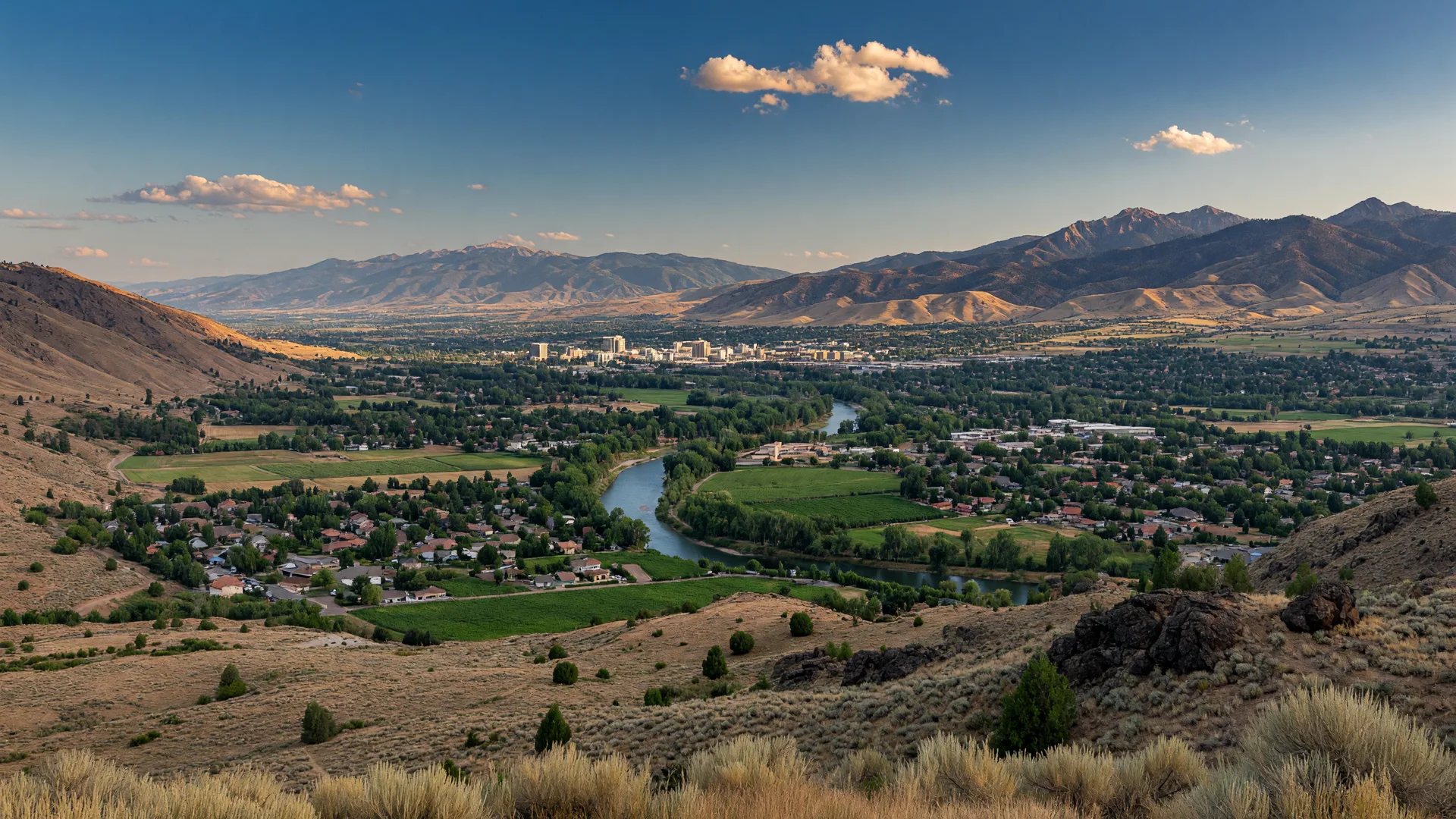
Living in the Boise area, known locally as the Treasure Valley, comes with real trade-offs, and this guide lays them out plainly. The Boise area offers outdoor access, four distinct seasons, and a smaller-city scale, and it also brings winter inversions, a growing population, and housing costs that vary widely by community. This is a balanced look at the places and the practical factors, with every figure tied to an official source and links to deeper guides on this site.
Pros and cons at a glance
The table below summarizes the main factors this guide covers, with the details and sources in the sections that follow.
| Pros | Cons |
|---|---|
| Outdoor access: foothills trails, the Boise River Greenbelt, and the mountains above the valley | Winter inversions can affect air quality on some days |
| Four distinct seasons with a mostly dry, mild overall climate | Cold winter nights and occasional valley snow. Boise's normal snowfall is about 17.7 inches for the entire season (NWS 1991–2020 normals) |
| Idaho's statewide price level below the national average | Housing costs vary widely by community and home |
| A growing airport with nonstop service to 30 destinations | Population growth brings traffic and demand for housing |
| A smaller-city scale with a compact downtown | Fewer big-city amenities than much larger metros |
Outdoor access and open space
Outdoor access is one of the most consistent themes in any discussion of the Boise area. The Boise foothills trail system, managed by Ridge to Rivers, puts miles of trails directly above the valley, and the Boise River Greenbelt is a paved pathway system that follows the river through the area, connecting parks and open space along the way. Both are open to everyone and free to use. The practical trade-off is seasonal: Ridge to Rivers publishes wet-weather and winter trail-use guidance, and trails can close when conditions are too wet or icy to protect the trail surface.
Four seasons and winter inversions
The Boise area has four distinct seasons, a pattern documented by the National Weather Service's climate summary for the Treasure Valley and Boise: cold winters with modest snow, a wet and changeable spring, hot and dry summers, and a crisp fall. Boise's normal snowfall is about 17.7 inches for the entire season (NWS 1991–2020 normals). For a month-by-month look at valley winters, see this site's guide to winter in the Boise area . The winter trade-off is the temperature inversion. Idaho DEQ notes that the area is subject to inversions in winter, when a layer of warmer air traps cooler air near the valley floor and pollutants can build up close to the ground. Air quality varies day to day, and Idaho DEQ publishes regional air-quality reports so residents can check current conditions.
Cost of living
The most reliable public measure of overall price levels is the U.S. Bureau of Economic Analysis Regional Price Parities, which compares states and metro areas against a national average of 100. In the 2024 edition, Idaho's all-items price level measured 95.5, below the national level. That is a statewide figure, not a Boise-area number, and it is not a housing figure: housing costs vary by home, neighborhood, and community. For a category-by-category walk through utilities, property taxes, insurance, and more, see this site's cost of living guide , and for the comparison many out-of-state buyers ask about, see how the cost of living in the Boise area compares with California .
Housing range and new construction
Housing in the Boise area spans a wide range of types and communities, and the four main cities each have a different character. Boise offers established neighborhoods, a downtown, and newer developments across the city. Meridian is home to large master-planned communities and a growing mix of housing. Eagle offers larger lots, acreage, and homes along the river and foothills. Star , on the western edge of the valley, has newer communities and more land. New construction is active across the area, and the choices range from attached homes to custom acreage properties. For the specifics, see this site's guide to buying new construction in the Boise area .
Growth and traffic
The Boise area is growing. The Census Bureau's July 1, 2025 estimate put Ada County at 546,141, up 10.3% from the April 1, 2020 estimates base. Ada County is where Boise, Meridian, Eagle, and Star are located. Growth of that scale brings demand for housing, services, and infrastructure, and it shows up on the roads. Traffic patterns in the area are shaped by the major corridors and the agencies that run them, covered in this site's guide to commuting in the Boise area .
Airport and travel
Boise Airport, the commercial airport serving the region, offers nonstop service to 30 destinations on eight airlines, as listed on Boise Airport's nonstop destinations page on November 2, 2026. The airport is a practical advantage for residents who travel for work or family, and the list of nonstop destinations is published and updated by the airport itself. For the current list, see the Boise Airport nonstop destinations page .
The smaller-city scale
The Boise area has grown a great deal, but it still operates at a smaller-city scale. The downtown is compact, most parts of the valley are close to the foothills or the river, and the region's size keeps day-to-day life relatively simple compared with much larger metros. The trade-off is that some amenities found in the largest cities, such as extensive rail transit or a vast array of cultural venues, are limited or absent. For many people, that smaller scale is exactly the point; for others, it is a factor to weigh before moving.
Sylvia's take
Every place has trade-offs, and the Boise area is no different. The best approach is to weigh the factors that matter most to you, housing type, commute, outdoor access, and cost, and to check the official sources for anything that changes, like air quality and nonstop flights. A balanced decision starts with accurate information.
Frequently asked questions
Is the cost of living in the Boise area higher or lower than the national average?
Idaho's statewide all-items price level measured 95.5 in the U.S. Bureau of Economic Analysis 2024 Regional Price Parities, below the national average of 100. It is a statewide figure, not a Boise-area number, and housing costs vary by home and community.
How fast is the Boise area growing?
The Census Bureau's July 1, 2025 estimate put Ada County at 546,141, up 10.3% from the April 1, 2020 estimates base.
How many airlines and destinations does Boise Airport offer?
Eight airlines with nonstop service to 30 destinations, per the Boise Airport's official nonstop destinations page.
What is winter like in the Boise area?
Cold, with modest valley snowfall: December is the snowiest month, averaging about 5 to 6 inches, per the National Weather Service climate summary. Winter inversions can affect air quality, and Idaho DEQ publishes regional air-quality reports.
Does the Boise area have all four seasons?
Yes. The National Weather Service climate summary for the Treasure Valley and Boise documents a cold winter, a wet and changeable spring, a hot and dry summer, and a crisp fall.