
 By Sylvia Dorrance, REALTOR®, eXp Realty
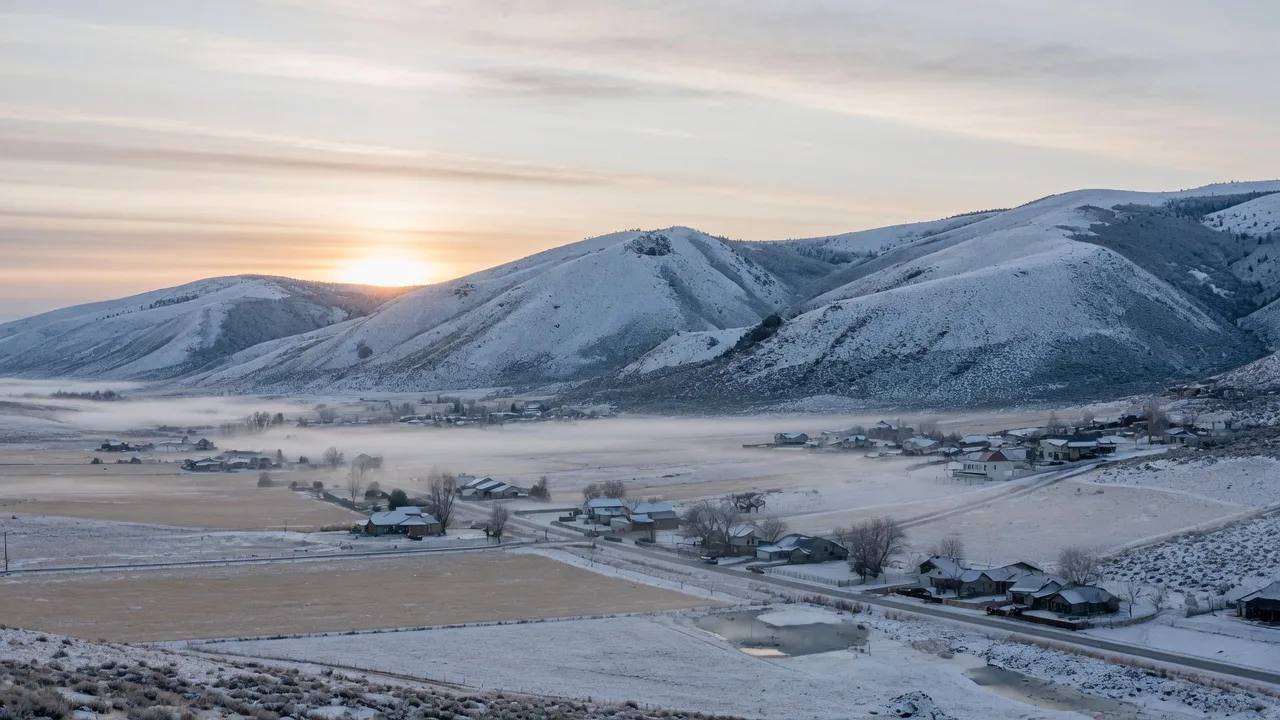
Winter in the Boise area, known locally as the Treasure Valley, is a season of cold mornings, occasional snow, and clear, crisp days. For anyone buying or selling a home here, winter matters for practical reasons: how the roads are maintained, how homes are prepared, and what there is to do when the snow falls. This guide covers what winter is like across Boise, Meridian, Eagle, and Star, with figures from the National Weather Service Boise climate summary and details from the agencies that manage roads, air quality, and trails. For the full year-round picture, see this site's guide to Boise-area weather by season.
Winter at a glance
The table below summarizes the winter months using the National Weather Service's climate summary for Boise and the Treasure Valley. December is the snowiest month, and January is typically the coldest stretch of the year.
| Month | Average high | Average low | Average snowfall | What to expect |
|---|---|---|---|---|
| December | Near 39°F | Near 25°F | About 5 to 6 inches | Snowiest month; short days and foggy mornings |
| January | Near 39°F | Near 25°F | About 5 inches | Coldest stretch of the year |
| February | Near 45°F | Near 28°F | About 3 inches | Days lengthen; snow begins to taper |
| March | Near 55°F | Near 34°F | About 1 inch | Winter winds down; the wet season continues |
Temperatures and snowfall are monthly normals from the National Weather Service climate summary, which describes the climate of the Treasure Valley and Boise. Averages are a guide, not a forecast for any given year.
What winter is like across the valley
The National Weather Service's climate summary describes the Treasure Valley as a whole, and Boise, Meridian, Eagle, and Star sit on the same valley floor, so they share the same general winter pattern: cold nights, modest snow, and occasional fog. The figures below are the official normals for Boise. Within the valley, conditions can vary from one part of town to another, and the foothills and mountains above the valley see more snow than the floor does.
Temperatures by month
December and January are the coldest months, with average highs near 39°F and overnight lows near 25°F. February warms slightly, with average highs near 45°F and lows near 28°F. By March, average highs climb to near 55°F and lows near 34°F, though early-spring snow is still possible. The pattern is a cold winter with real freezes most nights, followed by a gradual warm-up through late winter.
Snowfall by month
Snowfall in the Boise area is modest compared with the mountains. December is the snowiest month, averaging about 5 to 6 inches, with January close behind at about 5 inches. February averages about 3 inches, and March about 1 inch. Boise's normal snowfall is about 17.7 inches for the entire season, based on the National Weather Service's 1991–2020 normals, spread across several months, so valley snow is usually light and often melts between storms. Individual storms can bring more, and totals vary from year to year, but a typical valley winter is more about cold and fog than deep snow.
Valley snow versus the foothills and mountains
Snow in the Boise area depends a lot on elevation. The valley floor gets the modest totals above, while the Boise foothills, the low hills that rise along the north edge of the valley, typically see more snow and colder conditions than the city below. Higher up, the mountains above the valley receive the deepest snow of all. That difference shapes winter recreation: the foothills trails are often usable in winter when conditions allow, while the mountain recreation areas depend on the snowpack. Ridge to Rivers, which manages the foothills trail system, publishes winter trail-use guidance, and the City of Boise announces seasonal trail closures each December to prevent damage to the trails and protect wildlife habitat. For a closer look at the area, see this site's guide to the Boise foothills.
Winter inversions and air quality
Winter in the Boise area also brings temperature inversions. Idaho DEQ notes that winter inversions can trap pollutants near the valley floor; check DEQ's regional air quality reports for current conditions. For home shoppers, the practical point is simple: winter air quality varies day to day, and the official reports are the reliable way to track it.
Winter driving and road maintenance
Winter driving in the Boise area is managed by the Ada County Highway District, which maintains the roads in Ada County, where Boise, Meridian, Eagle, and Star are located. ACHD runs a priority system for plowing, applies anti-icing treatments before storms, and keeps crews working around the clock during winter weather. The district's winter operations pages describe the system in detail.
How plowing is prioritized
ACHD's winter operations page lists its plowing priorities in this order: arterial and collector roads, major intersections, overpasses and bridges, areas around hospitals and fire stations, school and railroad crossings, and streets with grades over six percent. Residential streets are plowed after main roads. ACHD uses magnesium chloride, salt, and sand for anti-icing before storms and de-icing during them. Homeowners are responsible for clearing the sidewalks in front of their homes.
Anti-icing and deicing
Before a storm, ACHD applies liquid magnesium chloride to roadways and bridges to keep snow and ice from bonding to the pavement. During and after a storm, crews plow and apply sand and salt for traction and melting. During winter storms, ACHD crews work around the clock, in 12-hour shifts, to keep the system moving. For drivers, the district's winter operations page is the place to see the full details, and this site's guide to winter driving in Idaho covers preparation, tires, and emergency kits.
Preparing a home for winter
Winter preparation for a home in the Boise area is practical and mostly straightforward. The guidance below is general; for details specific to your home, ask your service providers or a qualified professional.
Pipes and irrigation
Before hard freezes arrive, drain and blow out irrigation systems so standing water cannot freeze and crack pipes and heads. Insulate exposed pipes in crawl spaces, garages, and exterior walls, and know where the main shutoff valve is in case a pipe does freeze. Inside, keep the heat at a reasonable setting even when the house is empty, and open cabinet doors under sinks on the coldest nights so warm air reaches the plumbing.
Furnace and heating
Have the furnace serviced before the heating season, replace the filter on schedule, and make sure vents and registers are clear. If the home uses a heat pump, keep snow and ice cleared from the outdoor unit. A working thermostat and a spare filter are small investments that keep the system running through the coldest weeks.
Roof and gutters
Clear gutters and downspouts before snow season so melting snow has a place to go. Check the roof for loose or damaged shingles, and trim branches that overhang the roof. When snow does accumulate, watch for ice dams along the eaves, which form when heat escapes through the roof and melts snow that then refreezes at the edge.
Winter recreation in the Boise area
Winter is also a season of outdoor options in the Boise area, from the foothills to the river to the mountains above the valley.
Bogus Basin
Bogus Basin is a nonprofit mountain recreation area in the mountains above Boise, offering downhill and Nordic skiing, snowboarding, and other winter activities. Opening dates and conditions vary from season to season, and no opening date has been published for the coming season, so check the official Bogus Basin website for current status, hours, and conditions before you go.
The Boise River Greenbelt
The Boise River Greenbelt is a paved pathway system that follows the river through the Boise area, and it stays open through winter. On clear days, the greenbelt is a popular place for walks and runs, with the river, the trees, and the foothills under snow. Dress for the cold and watch for icy patches on the path.
Boise foothills trails
The Boise foothills trail system, managed by Ridge to Rivers, offers miles of trails above the valley, and many are usable in winter when conditions allow. Ridge to Rivers publishes wet-weather and winter trail-use guidance. The City of Boise and Ridge to Rivers have announced seasonal trail closures starting in December in past seasons; check Ridge to Rivers for current closures. Check the trail conditions before heading out, and turn back when the trails are too wet or icy. For more on the area, see this site's guide to the Boise foothills .
Sylvia's take
Winter in the Boise area is very manageable when you plan for it. Know how the roads are prioritized, prepare the home before the first hard freeze, and check official sources for air quality, trail conditions, and mountain recreation status. A little preparation in the fall makes the season straightforward.
Frequently asked questions
How cold does it get in the Boise area in winter?
December and January are the coldest months, with average highs near 39°F and overnight lows near 25°F, per the National Weather Service Boise climate summary. February warms slightly, with average highs near 45°F.
How much snow does the Boise area get in winter?
December is the snowiest month, averaging about 5 to 6 inches, with January about 5 inches, February about 3 inches, and March about 1 inch, per the National Weather Service climate summary for Boise and the Treasure Valley.
How much snow does Boise get?
Boise's normal snowfall is about 17.7 inches for the entire season, based on the National Weather Service's 1991–2020 normals, spread across several months, so valley snow is usually light and often melts between storms.
Do the foothills and mountains get more snow than the valley?
Yes. The valley floor gets the modest totals above, while the Boise foothills typically see more snow, and the mountains above the valley receive the most. Ridge to Rivers publishes winter trail-use guidance, and the City of Boise announces seasonal trail closures starting in December.
Why does air quality get worse in winter?
Idaho DEQ notes the area is subject to winter temperature inversions, which trap cooler air and pollutants near the valley floor. Idaho DEQ publishes regional air-quality reports and guidance for current conditions.
When is Bogus Basin open in winter?
Bogus Basin is a nonprofit mountain recreation area, and opening dates vary by season. No opening date has been published for the coming season, so check the official Bogus Basin website for current status.